Description
The Colonoscopy or colon endoscopy, also known as Fibrocolonoscopy, is a test of capital importance in the diagnosis and prevention of colon polyps and of Colorectal cancer, enabling a detailed exploration of the entire colon path, clearly identifying any lesions that may exist, allowing biopsies to be taken, and to perform complementary therapeutic procedures that are necessary.
It is a safe and effective diagnostic procedure that allows the diagnosis of any inflammatory or tumor-type disease of the colon.
To perform Colonoscopy, a long, flexible tubular instrument is used that is introduced through the anus and has a camera at its distal end, capable of transmitting light and an image that is reproduced in real time on a monitor. It has a built-in internal channel that allows you to insert all the necessary equipment to carry out any type of therapy.
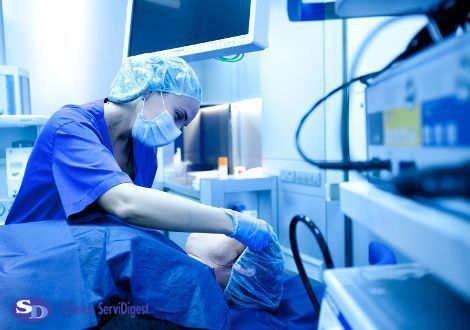
It is a technique that is performed on an outpatient basis and under sedation so the patient does not feel pain during the procedure.
Why is Colon Cancer Prevention so important?
Currently, Colon Cancer affects a high percentage of the population of our country, being the first most common cancer among women and men.
Many people with colon cancer have no signs or symptoms during the early stages of the disease. To avoid its development, it is necessary to take preventive measures such as periodically performing a Colonoscopy (essential for the early diagnosis and treatment of this pathology).
The main indications for Colonoscopy are the prevention of Colorectal Cancer, the control and removal of polyps, the suspicion of inflammatory bowel disease, changes in evacuation habits and the study of abdominal symptoms in general.
More information about colonoscopy